Natural gas is a domestically produced and widely available fuel primarily composed of methane. Advantages of natural gas as a transportation fuel include its relative low cost, established distribution network, and emissions benefits compared to gasoline or diesel. Natural gas accounts for approximately 30% of overall energy use in the United States, but only 5% of transportation energy use.
For use in vehicles, natural gas must be compressed (compressed natural gas, CNG) or liquefied (liquefied natural gas, LNG). Both CNG and LNG are sold in units of gasoline or diesel gallon equivalents (GGEs or DGEs) which represent the energy content of a gallon of gasoline or diesel fuel.
Compressed Natural Gas (CNG)
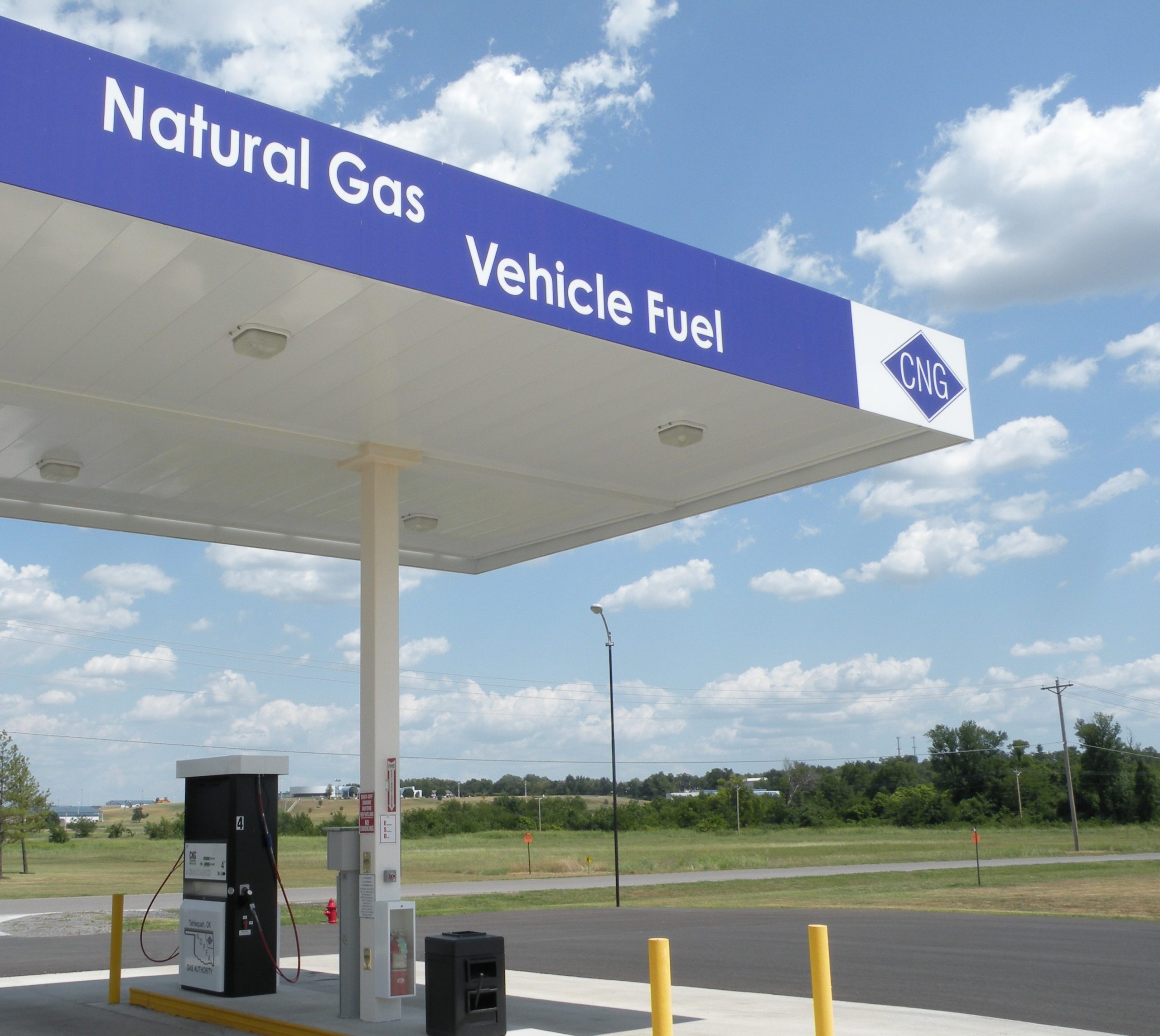
CNG is natural gas compressed to less than 1% of its volume at standard atmospheric pressure to provide adequate driving range when stored onboard a vehicle. Specialized equipment is used to store the highly pressurized gas (3,600 pounds per square inch) onboard vehicles and must be installed by a licensed technician. CNG is used in light-, medium-, and heavy-duty applications, and CNG-powered vehicles get roughly the same fuel economy as conventional gasoline vehicles on a gasoline gallon equivalent (GGE) basis.
CNG is widely available at fueling stations throughout Oklahoma. In fact, Oklahoma has more CNG fueling stations per capita than any other state.
Liquified Natural Gas (LNG)
LNG is natural gas in its liquid form, produced through a liquefaction process of purifying natural gas and super-cooling it to -260°F. Widespread use of LNG in commercial applications has been limited due to its relatively costly production process as well as expensive cryogenic tanks needed to store the fuel. LNG is typically used in medium- and heavy-duty vehicles and is suitable for applications that require longer ranges, as natural gas in liquid form is denser than gaseous CNG, providing more energy storage by volume.
There are currently no public LNG fueling stations in Oklahoma.
Renewable Natural Gas (RNG)
Renewable natural gas (RNG), also known as biomethane, is produced from organic materials—such as waste from landfills and livestock—through anaerobic digestion and is considered an advanced biofuel under the Renewable Fuel Standard. RNG is chemically identical to fossil-derived conventional natural gas, so it can be channeled directly through existing natural gas pipelines and can be compressed or liquified for use as vehicle fuel without any alteration to vehicle or fueling systems. RNG is readily available and cost comparable to conventional natural gas.
RNG has the greatest greenhouse gas (GHG) emissions benefits of all vehicle fuels. According to Argonne National Laboratory’s (ANL) GREET modeling tool, average greenhouse gas emissions for RNG made from various feedstocks (landfill gas, wastewater, animal manure and food waste) are approximately 150% lower than ultra-low-sulfur diesel (ULSD) and 145% lower than fossil natural gas. ANL shows the greatest emissions reductions coming from RNG made from food waste, at 196% and 191% lower than ULSD and fossil natural gas, respectively.
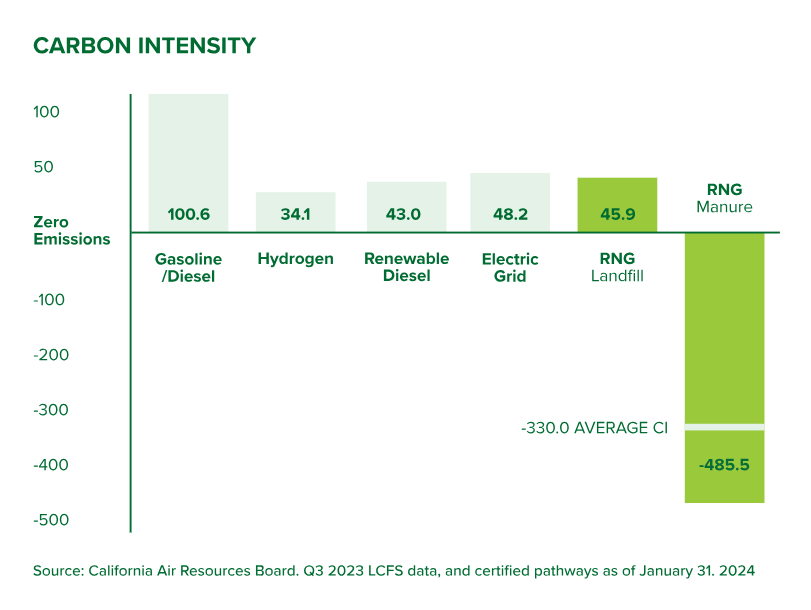
RNG is most commonly available via fueling agreements between RNG producers and end-users, which is an accounting-based approach that allows the end-user to continue sourcing traditional pipeline gas. Less commonly, RNG can be procured directly from the production source, such as a landfill or wastewater treatment facility.
When RNG is produced, credits called renewable identification numbers (RINs) are generated and can be traded under the Renewable Fuel Standard Program. Often, the fuel producer may share a portion of the credit’s value with the end-user through a fueling agreement, which results in RNG being lower cost than conventional natural gas. Learn more about RINs and the Renewable Fuel Standard.
Vehicle Considerations
Natural gas vehicles (NGVs) are available in both light-duty and heavy-duty segments. Major manufacturers like Ford, Chevrolet, and Honda have offered CNG-compatible models, especially for fleet use. Conventional gasoline or diesel vehicles can also be converted by installing a CNG or LNG kit. Conversion involves adding a gas tank, modifying the engine, and integrating safety systems. Conversion costs vary widely, typically ranging from $5,000 to $12,000, depending on the vehicle type and system complexity. Proper certifications and standards must be met to ensure safety.
Visit the Alternative Fuels Data Center for more information on natural gas vehicle models and options for fuel conversion.
Explore CNG Fueling Stations in the TACC area
Incentives & Funding for Natural Gas
Significant tax credits, rebates and incentives are available for CNG vehicles and station developments. View Incentives & Funding Details
CNG Fueling Station Development Guides
Tulsa CNG Fueling Station Development Guide
This guide, developed by Tulsa Area Clean Cities, gives a step-by-step overview of the station development process in Tulsa, complete with contact information and online resources.
National CNG Fueling Station Development Guide
This guide was developed by the Drive Natural Gas Initiative to give developers a broad overview of development practices and guidelines in the United States.
Natural Gas Links
- Alternative Fuels Data Center CNG Overview introduces information about the fuel, benefits and considerations, a station map, available vehicles, and tax incentives.
- EPA & CARB Certified CNG Conversion Kits features EPA’s listing of all vehicles eligible for CNG conversion.
- The Transport Project (formerly Natural Gas Vehicles for America) provides additional information on CNG and RNG.
- Benefits of CNG Refuse Trucks for Tulsa is a presentation made by Tulsa Area Clean Cities to Tulsa’s TARE board on the benefits of CNG refuse trucks.
- EPA provides further reading, resources, and tools related to renewable natural gas.
- Energy Vision offers RNG case studies and research reports.